Pressure injuries are classified (or staged) by how much tissue damage is visible. These classifications help clinicians describe the severity of an injury, guide treatment, and track whether the wound is improving or getting worse.
The internationally adopted system includes six main classifications: Stage 1, Stage 2, Stage 3, Stage 4, Deep Tissue Pressure Injury, and Unstageable Pressure Injury.
Why Classification Matters
Pressure injuries do not all look the same. Some begin as subtle changes in intact skin, while others involve deep tissue loss, exposed structures, or wounds where the true depth cannot yet be seen.
Correct classification helps care teams communicate clearly and respond appropriately.
Stage 1
Intact Skin with Early Visible Change
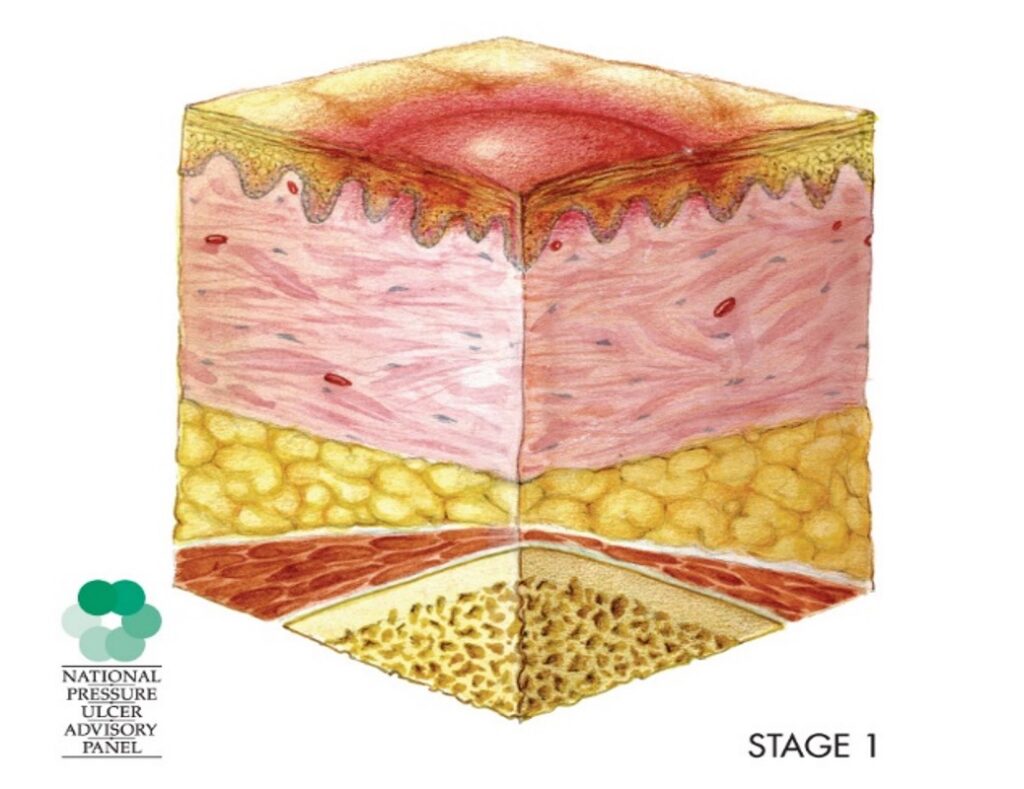
A Stage 1 pressure injury means the skin is still intact, but there is a visible or noticeable change in the area.
The skin may appear red, discolored, painful, firm, soft, warmer, or cooler than nearby tissue. In people with darker skin tones, these changes may be harder to see, and the skin may not show obvious blanching when pressed.
Simple way to think about it: The skin is not broken, but the tissue is already showing signs of stress
Stage 2
Partial-Thickness Skin Loss
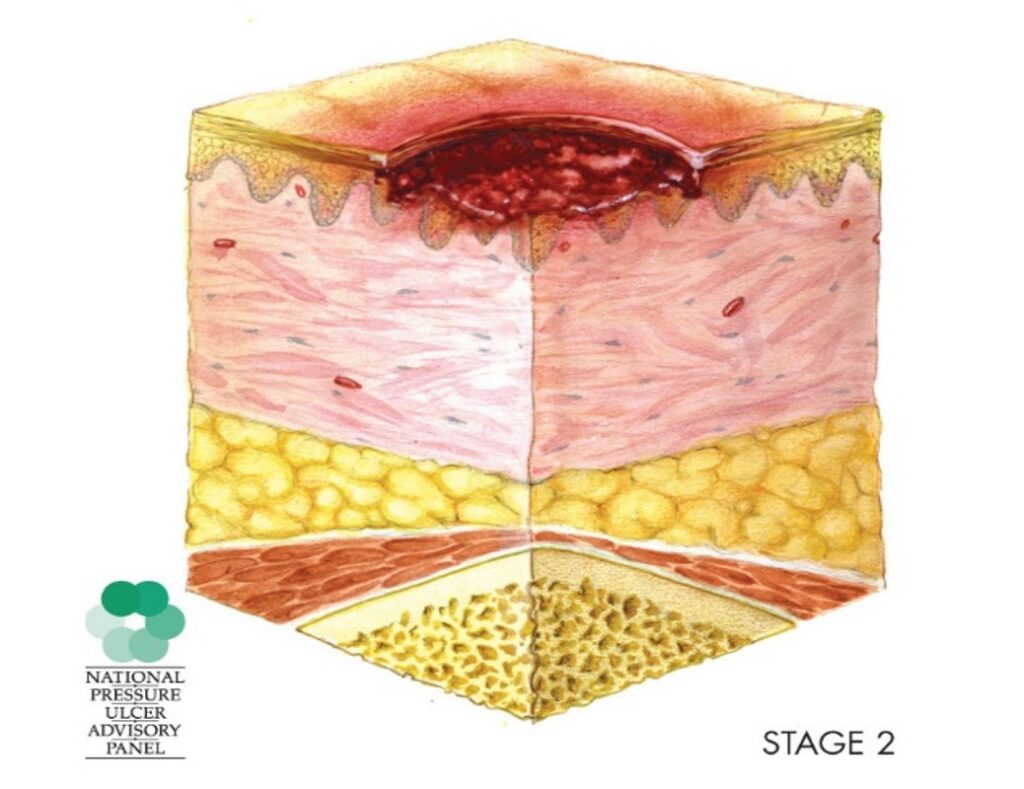
A Stage 2 pressure injury involves damage to the upper layers of skin. It may look like a shallow open wound with a pink or red wound bed, or it may appear as an intact or ruptured fluid-filled blister.
Simple way to think about it: The skin surface has opened or blistered, but the damage is still relatively shallow.
Stage 3
Full-Thickness Skin Loss
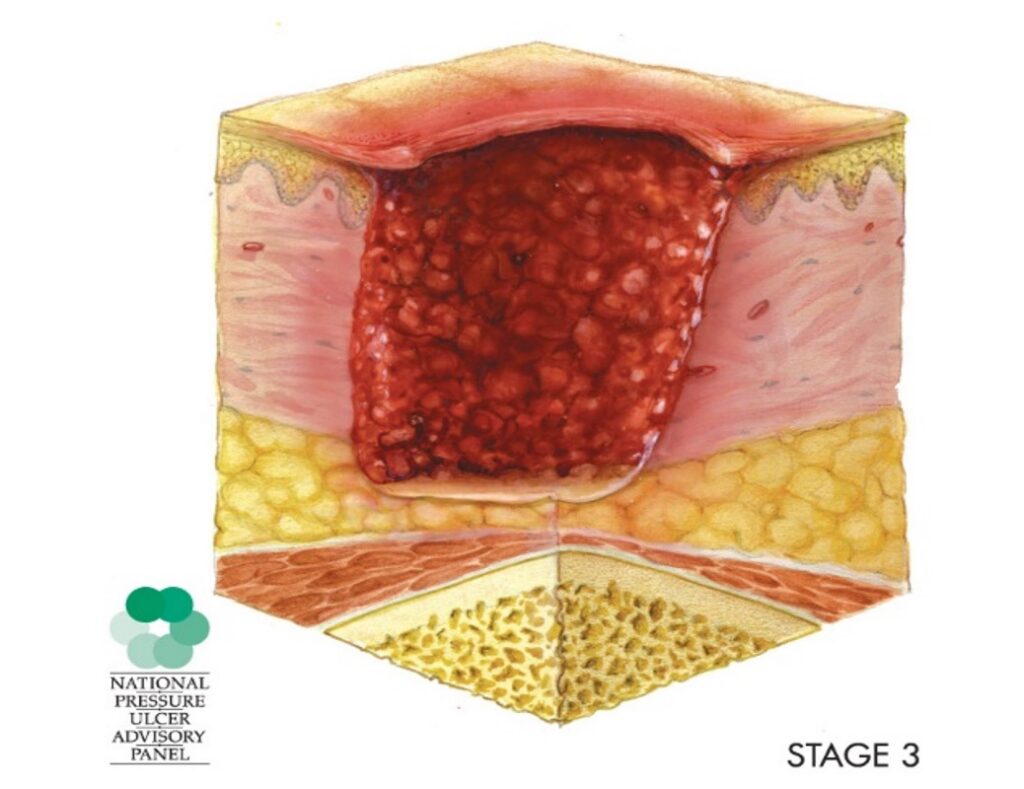
A Stage 3 pressure injury extends through the full thickness of the skin. Fat tissue may be visible, but bone, tendon, and muscle are not exposed. Slough may be present, and the wound may include undermining or tunneling.
Simple way to think about it: The wound is deeper and extends below the skin, but it has not exposed deeper structures like muscle or bone.
Stage 4
Full-Thickness Tissue Loss
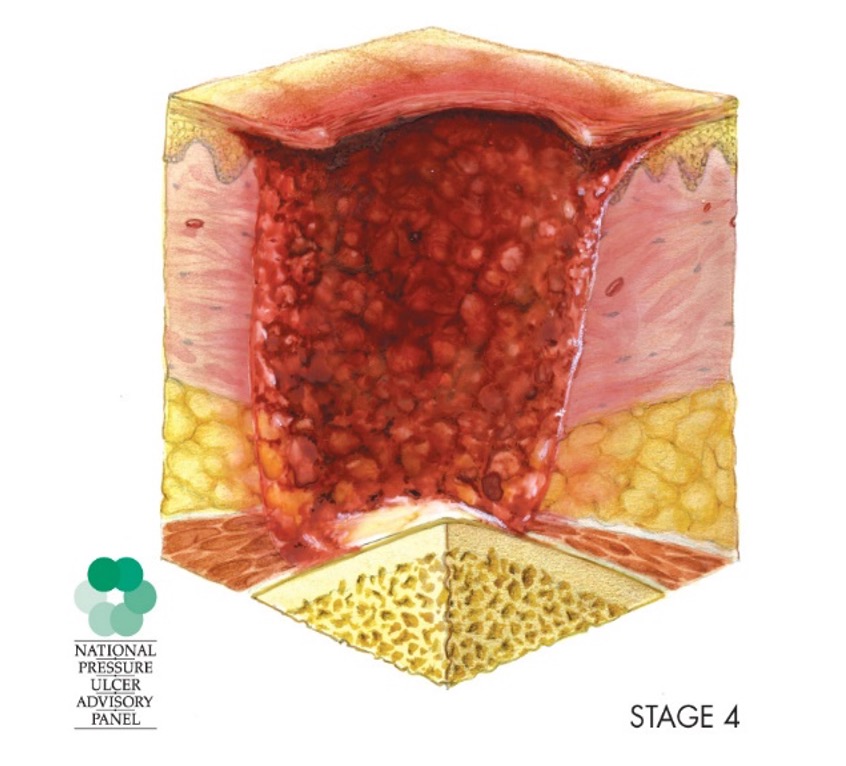
A Stage 4 pressure injury is the most severe staged category. It involves full-thickness tissue loss with exposed or directly palpable bone, tendon, or muscle. These wounds may also include slough, eschar, undermining, or tunneling.
Simple way to think about it: The injury is deep enough to expose major underlying structures.
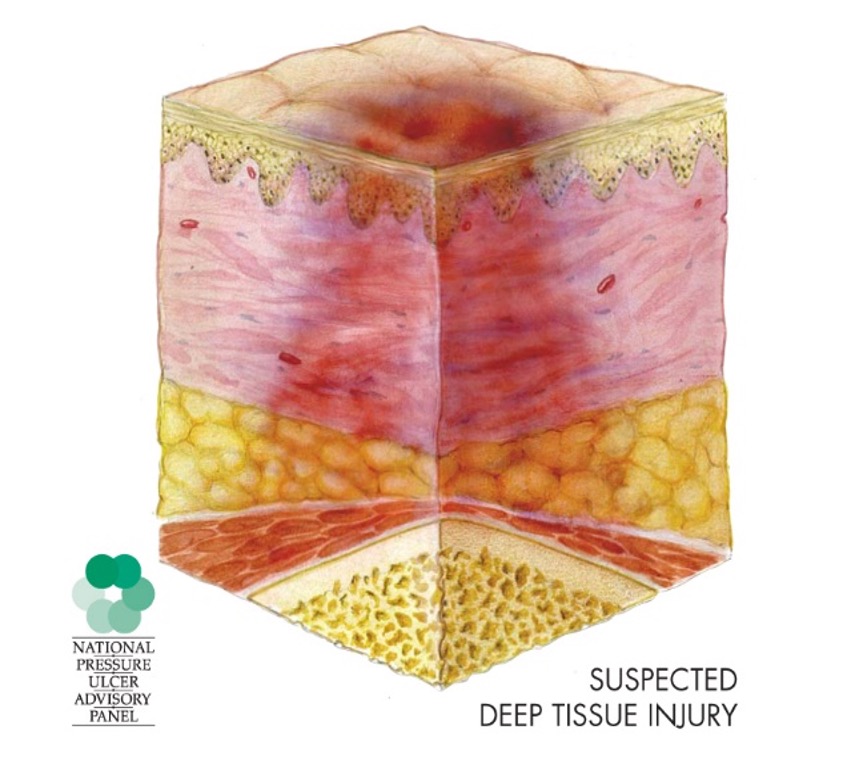
Deep Tissue Pressure Injury
A deep tissue pressure injury may appear as a purple, maroon, or darkly discolored area, or as a blood-filled blister. The surface skin may still be intact, but the tissue underneath has been damaged by pressure and/or shear.
The area may feel painful, firm, mushy, boggy, warmer, or cooler than nearby skin. Like Stage 1 injuries, deep tissue injuries can be harder to detect in people with darker skin tones.
Simple way to think about it: The most serious damage may be hidden beneath the surface.
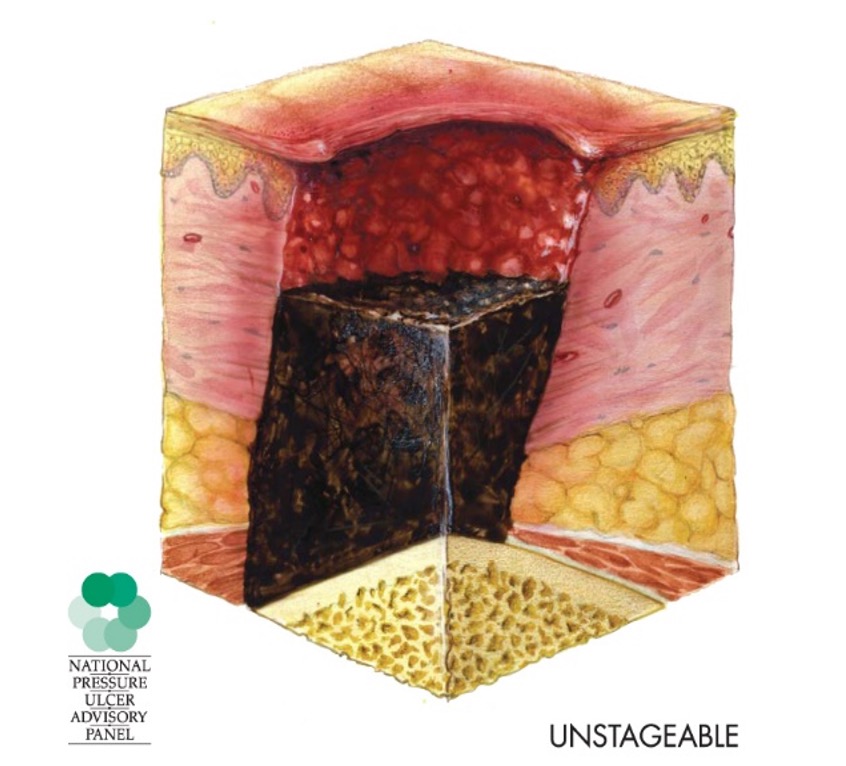
Unstageable Pressure Injury
An unstageable pressure injury means the wound is full thickness, but the true depth cannot be determined because the base of the wound is covered by slough or eschar. Until that tissue is removed or clears enough to see the wound bed, the injury cannot be assigned a Stage 3 or Stage 4 classification.
Simple way to think about it: The wound is deep, but clinicians cannot yet see how deep.
What Classification Can and Cannot Tell Us
Classification is important, but it is based on visible tissue damage. That means it often describes what has already surfaced, not necessarily when the damage began.
Pressure injury prevention depends on identifying risk and tissue damage as early as possible, ideally before visible breakdown appears.
(National Pressure Ulcer Advisory Panel, European Pressure Ulcer Advisory Panel and Pan Pacific Pressure Injury Alliance. Prevention and Treatment of Pressure Ulcers: Quick Reference Guide. Emily Haesler (Ed.). Cambridge Media: Osborne Park, Western Australia; 2014.)