A pressure injury (also known as a bed sore or pressure ulcer) is damage to the skin and the tissue underneath it, caused by prolonged pressure or pressure combined with shear (such as sliding in a bed or chair).
They most often develop over bony areas of the body, like the heels and tailbone, but can also occur where medical devices or other objects press against the skin.
Where Do Pressure Injuries Occur?
Pressure injuries can develop in different parts of the body, but most occur in a few key areas.
- Heels and sacrum (lower back/tailbone) account for the majority of cases
- Other common areas include hips, elbows, and areas under medical devices
Who Is At Risk?
Many patients are at risk of developing a pressure injury, especially those who cannot move easily.
Common risk factors include:
- Reduced mobility or activity
- Poor blood flow (exacerbated by comorbidities like diabetes or heart disease)
- Skin moisture or existing skin damage
- Older age
- Poor nutrition or general health
- Underlying medical conditions affecting the blood
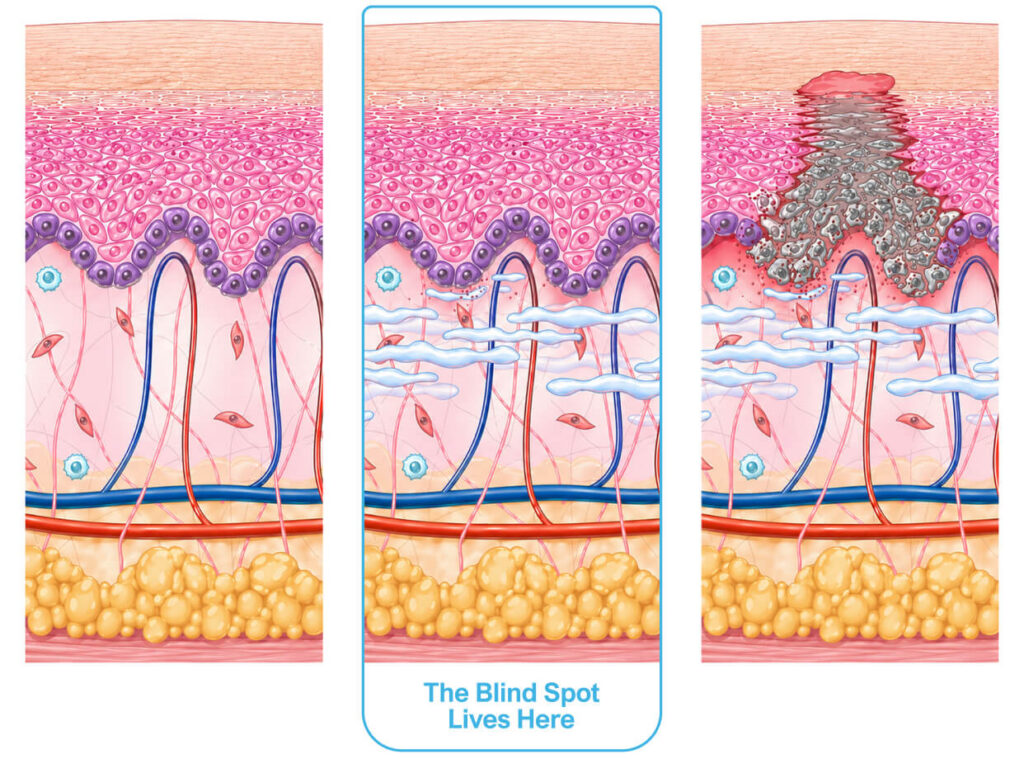
The Hidden Challenge: Damage Starts Below the Skin
Pressure injury damage does not begin at the skin surface.
It starts at a microscopic level, deep within the tissue. Over time, this damage progresses upward until it becomes visible on the skin.
This creates a major challenge:
- Early damage cannot be seen with the naked eye
- Many at-risk areas go undetected
- By the time damage is visible, it may already be advanced
Why Prevention Is Difficult Today
Current prevention approaches rely heavily on:
- Visual skin assessments
- Risk assessment tools like the Braden Scale
- Clinical judgement
However, these methods have important limitations:
- They are often subjective and vary by clinician1
- They assess overall patient risk, not specific body areas
- They rely on visible signs, which appear late
As a result, many early-stage pressure injuries are missed.
Even identifying a Stage 1 pressure injury using clinical judgment alone is only accurate about half the time.
The Role of Skin Tone
Detecting early pressure injuries can be even more challenging in people with darker skin tones.
- Changes in skin color may be harder to see
- Early signs like redness may not be visible
- This can lead to later detection and more severe injuries
What Happens If Damage Is Missed?
When early damage is not detected and treated:
- It can progress to visible skin breakdown
- Injuries may become more severe (Stage 2, 3, or 4)
- Some cases require complex treatments, including surgery
Pressure injury prevention requires early detection. Early detection requires SEM scanning
References.
1. Moore, Z. et al. 2019